
PreXion
Excelsior Max (LFOV)
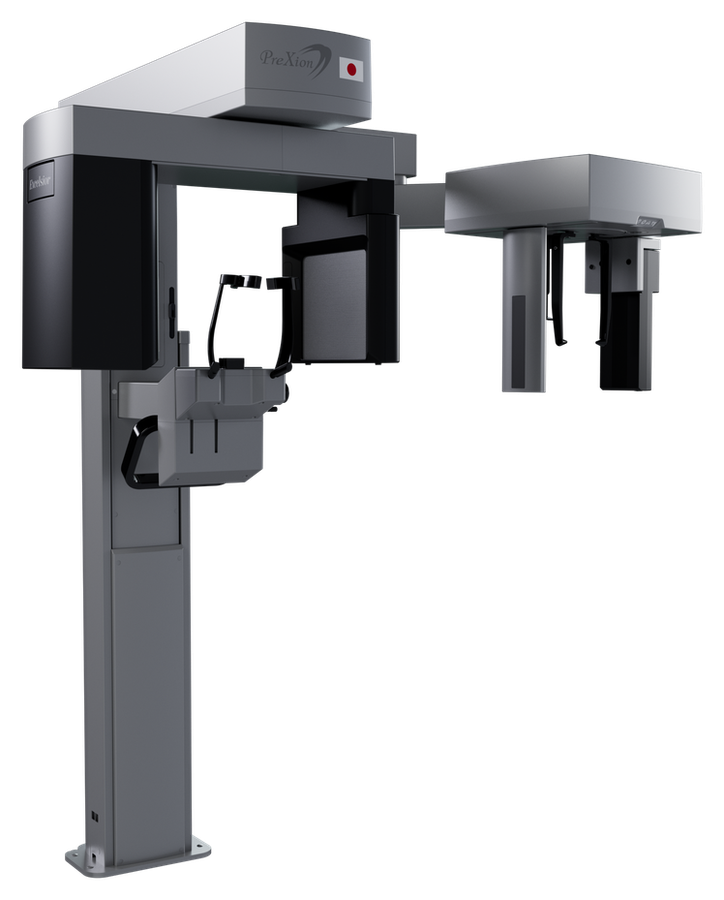
PreXion's large field of view CBCT — up to 16×21 cm for cranial and extended full-arch cases, on the current Excelsior imaging platform.
Serving dentistry since 2003
Installation, training & expert support included
About the Excelsior Max (LFOV)
The Excelsior Max (LFOV) is PreXion's flagship field-of-view configuration on the current Excelsior platform — the unit to reach for when a case genuinely needs the whole picture: full craniofacial anatomy, airway, TMJ, orthognathic planning, or complex orthodontic diagnosis. It shares its acquisition hardware and Software Eye pipeline with the rest of the Excelsior line, but extends the field-of-view lineup two sizes past the Excelsior Mid — from the same small 5×5, 9×6, and 9×9 cm options up through 16×9 cm and, unique to the Max, 16×15 and 16×21 cm, the largest field of view in PreXion's current product line. Reaching those largest fields without asking a patient to sit through repeated exposures is the point of PreXion's stitching technology: the chin rest moves during a continuous, single-sequence acquisition, and the software automatically fuses the resulting volumes — built with roughly a 3 cm overlap between layers — while Patient Motion Correction keeps the stitched image uniform. The result is one exam instead of several repositioned shots, less chance of a retake, and a full-cranium or full-craniofacial dataset built from a single continuous capture. Because it's built on the same Excelsior platform as the Mid, the Max also captures 2D panoramic images — and, with the CEPH configuration, cephalometric images — from the same unit: fast pan, standard and pediatric panoramic, bitewing, enhanced ortho, maxillary sinus, and TMJ views in 2D, plus lateral, AP/PA frontal, oblique, fast, and carpal cephalometric views when equipped. For practices doing full-arch implant work, airway assessment, orthodontic case documentation, or maxillofacial referrals, the Max is the one Excelsior configuration that covers everything from small targeted scans to the largest craniofacial field of view on a single machine, with a clear path to add cephalometric imaging later if it isn't ordered on day one. It runs Software Eye for day-to-day acquisition and DICOM workflow, with Patient Motion Correction (PMC), 3-level Metal Artifact Reduction (MAR), AI-assisted cephalometric tracing, and — through the optional OnDemand3D planning software — 3D implant planning, airway volume measurement, STL conversion, virtual endoscopy, and DICOM fusion.
- FOVs: 5×5 cm (implant/endo/3rd-molar detail) through 16×15 cm (cranium, orthognathic surgery) and 16×21 cm (complete craniofacial region, orthodontics)
- Voxel size: 75–400 µm, isotropic
- Focal spot: 0.5mm
- Tube: 60–120 kV, 3.2–16 mA — 120 kV operation reduces beam-hardening artifacts and low-energy photon noise
- Stitching for the 16×15 and 16×21 cm fields: the chin rest moves for a continuous, single-sequence capture with automatic volume fusion and PMC, instead of repositioning the patient between shots
- Patient Motion Correction (PMC) and 3-level Metal Artifact Reduction (MAR) — MAR levels can be reprocessed after the scan without re-exposing the patient
- AI-assisted cephalometric tracing, 3D implant planning, airway volume, STL conversion, virtual endoscopy, DICOM fusion
- Cephalometric imaging available as an option (Excelsior Max CEPH)
- Software: Software Eye (1 server + 5 clients license)
- Supply voltage: 110/127/220/240 AC
- Four selectable resolution programs per scan — LD, STD, HD, and UHD — trading exposure time and voxel size for image detail depending on the exam's purpose
- 3-axis movement system (two linear directions plus one rotation) for 2D acquisition, allowing adjustable slice-plane thickness and constant vertical magnification across panoramic and bitewing images
- Multi-slice panoramic with up to 41 layers and an adjustable cutting-plane depth, for reviewing structures at multiple depths instead of one flattened plane
- 2D image-processing algorithms (Contrast and Focus) applied per region of the panoramic image for a more homogeneous, lower-noise result, with added definition in the incisor/canine, TMJ, and root canal regions
- Panoramic exam library: fast pan, standard and pediatric panoramic, bitewing, enhanced ortho, maxillary sinus, and TMJ views, plus lateral, AP/PA frontal, oblique, fast, and carpal cephalometric views on the CEPH configuration
- Optional OnDemand3D planning software: implant simulation directly on the acquired 2D/3D volume with mandibular-canal identification, STL conversion for 3D printing or digital surgical guide design, customizable report templates (HTML/PPT/PDF), and a shareable DICOM viewer for referring offices or patients without their own viewing software
New to CBCT, or narrowing down field of view, voxel size, and cost? Read the complete guide to dental CBCT before you decide.
Under the hood
Excelsior Max (LFOV) technology
Patient Motion Correction (PMC)
Micro-movements during a scan are common and can blur or misalign the final volume. PreXion's Patient Motion Correction runs automatically on every scan, correcting for those small shifts in software rather than asking for a retake. On the Excelsior Max, PMC also underpins the stitching process for the 16×15 and 16×21 cm fields, keeping multi-layer volumes uniform even though the chin rest is moving during capture.
Metal Artifact Reduction (MAR)
Gutta-percha, implants, wide prostheses, and metal restorations all throw off dense-object artifacts on CT. The Excelsior Max applies automatic metal reduction plus three selectable MAR processing levels, and because correction happens in post-processing, a case can be reprocessed at a different MAR level after the fact without a second exposure to the patient.
120kV Tube Voltage
PreXion runs the Excelsior line at up to 120 kV, paired with dedicated radiation filters. Higher-energy operation reduces the proportion of low-energy photons reaching the sensor, which cuts beam-hardening artifacts around dense structures and produces a cleaner, better-defined image than lower-voltage operation alone.
Stitching for Large-FOV Scans
The Excelsior Max's two largest fields — 16×15 and 16×21 cm — are captured by moving the chin rest through a continuous, single-sequence acquisition instead of repositioning the patient between separate exposures. The software automatically fuses the resulting volumes, built with roughly a 3 cm overlap between layers, and applies Patient Motion Correction across the stitched result. That combination is what lets the Max reach full-cranium and full-craniofacial fields of view without the added artifacts or retake risk of a multi-shot exam.
AI-Assisted Cephalometric Tracing
Manual cephalometric tracing on the Excelsior Max CEPH configuration supports named analysis protocols — McNamara, USP, Ricketts, Steiner, Rocabado, Tweed, among others. An optional AI module applies those same recognized protocols automatically, placing the landmarks without a technician tracing each point by hand, which speeds up complex orthodontic and orthognathic case analysis.
3D Implant Planning & Airway Volume Measurement
PreXion's optional OnDemand3D software adds dedicated planning modules — including Implant and Airway tabs — for simulating implant position directly on the acquired volume in both 2D and 3D, identifying the mandibular canal, and measuring airway volume for sleep and airway cases. The same software converts DICOM data to STL for 3D printing or digital surgical guide design, applies DICOM fusion using more than 20 pre-made 3D volume-rendering templates, and can generate a standalone viewer so referring offices or patients can review a case without a DICOM program of their own.
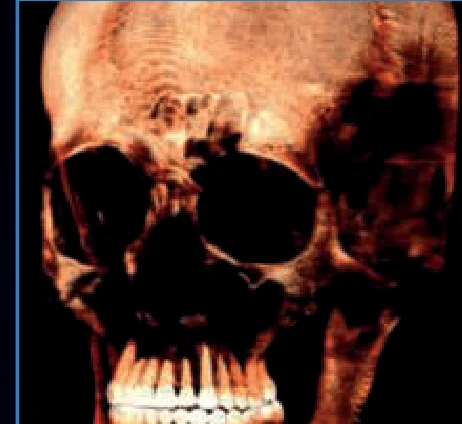
Sample captures
Clinical output from the Excelsior Max (LFOV)
Actual radiographs produced by this system — the image quality you're buying, not a brochure rendering.
Excelsior Max (LFOV) questions, answered
What field of view options does the PreXion Excelsior Max have?
The Excelsior Max (LFOV) offers six fields of view: 5×5 cm, 9×6 cm, 9×9 cm, 16×9 cm, 16×15 cm, and 16×21 cm — the largest reaches full craniofacial coverage.
What is the difference between the Excelsior Max and Excelsior Mid?
Both cap out at a 16 cm diameter field of view, but the Excelsior Max extends taller — up to 16×21 cm versus the Mid's 16×9 cm — for airway, TMJ, and extended full-arch or cranial cases.
Does the PreXion Excelsior Max include airway and implant planning software?
Yes. Software Eye on the Excelsior Max includes 3D implant planning, airway volume measurement, STL conversion for 3D printing and digital surgical guide design, virtual endoscopy, and DICOM fusion, alongside AI-assisted cephalometric tracing.
What is the voxel size and focal spot of the PreXion Excelsior Max?
The Excelsior Max has a focal spot of 0.5mm and an isotropic voxel size from 75 to 400 µm depending on the field of view and resolution selected.
What software does the PreXion Excelsior Max work with?
The Excelsior Max runs Software Eye with PMC motion correction, 3-level MAR, AI ceph tracing, and the implant/airway planning tools described above. Every scan also exports in the standard DICOM format, so it's compatible with any DICOM-compliant viewing or planning software your practice already uses, not just Software Eye.
What is included when I buy the PreXion Excelsior Max from Dental TI?
Every PreXion Excelsior Max comes with manufacturer-backed installation and support from PreXion. Dental TI adds another layer on top: site planning, integration with your practice's imaging software, on-site team training with remote training also available, and expert remote and on-site support of our own. Dental TI has served dentistry since 2003 from Carmel, Indiana.
How does the Excelsior Max capture its largest fields of view (16×15 and 16×21 cm) without extra artifacts?
It uses stitching: the chin rest moves to capture the volume in a continuous, single-sequence acquisition rather than repositioning the patient for separate shots. Automatic volume fusion combined with Patient Motion Correction keeps the stitched image uniform and reduces both artifacts and the chance of a retake.
Does correcting metal artifacts on the Excelsior Max require rescanning the patient?
No. The Excelsior Max's 3-level Metal Artifact Reduction lets you reprocess the same scan at a different correction level after the fact — for gutta-percha, implants, wide prostheses, or metal restorations — without a new exposure.
What cephalometric analysis protocols does the Excelsior Max CEPH support?
Manual tracing supports named protocols including McNamara, USP, Ricketts, Steiner, Rocabado, and Tweed. An optional AI-assisted tracing module can also apply these scientifically recognized protocols automatically to speed up complex analyses.
What computer do I need to run the Excelsior Max?
PreXion's minimum recommendation for the Excelsior Max's 3D acquisition workstation: Windows 10 64-bit Professional, Intel Core i7 (10th gen or newer, 12 MB cache, 4.0 GHz+), 16 GB RAM, an Nvidia GeForce RTX 4060 8GB or better, a 500W+ power supply, 1TB+ storage, a 1920×1080 monitor, and a dedicated Gigabit Ethernet adapter.
Does installing the Excelsior Max require a certified technician?
Yes — PreXion requires equipment assembly to be performed by a certified technician, and the shipping packaging must stay sealed until they arrive; opening it early voids the manufacturer's warranty. Dental TI coordinates this as part of installation.
Does the Excelsior Max also capture 2D panoramic and cephalometric images, or only 3D CBCT volumes?
Both. The Excelsior Max is built as a combined panoramic-and-CBCT unit: alongside its six CBCT fields of view, it captures fast pan, standard and pediatric panoramic, bitewing, enhanced ortho, maxillary sinus, and TMJ images in 2D. Add the Excelsior Max CEPH configuration and it also captures lateral, AP/PA frontal, oblique, fast, and carpal cephalometric images from the same unit.
What resolution options can I choose on the Excelsior Max?
Every scan lets you pick from four resolution programs — LD, STD, HD, and UHD — trading exposure time and voxel size for image detail depending on what the exam calls for. Isotropic voxel size on the Max ranges from 75 to 400 µm across those settings and the available fields of view.
What planning software is available for the Excelsior Max's 3D scans?
The Excelsior Max can be paired with PreXion's optional OnDemand3D software for case planning beyond acquisition: implant simulation directly on the 2D and 3D volume with mandibular-canal identification, dedicated airway volume measurement, STL conversion for 3D printing or digital surgical guide design, DICOM fusion against more than 20 pre-made 3D volume-rendering templates, and a shareable viewer for referring offices or patients without their own DICOM software. Software Eye handles day-to-day acquisition, patient/exam management, and DICOM export; OnDemand3D is the deeper planning layer on top.
What is the 3-axis movement system on the Excelsior Max?
The Excelsior Max's gantry moves on three axes — two linear directions plus one rotation — during 2D acquisition. That range of motion is what allows adjustable slice-plane thickness and constant vertical magnification across panoramic and bitewing images, instead of a fixed geometry.
How much room does the Excelsior Max need?
PreXion publishes room-size diagrams for the Excelsior line covering both configurations — with the CEPH arm, which needs a wider footprint to clear the cephalometric sensor's swing, and without it — each with minimum and ideal clearance dimensions. Dental TI reviews your actual floor plan against these dimensions as part of site planning before installation.
Is the Excelsior Max (LFOV) right for your practice?
Talk it through with an advisor who installs these machines every week — including the ones we'd steer you away from.