
Equipment planning · 2026 tax guide
Section 179for dental equipment
in 2026.
Understand what qualifies, what a write-off actually saves and what needs to happen before year-end.
Read the guide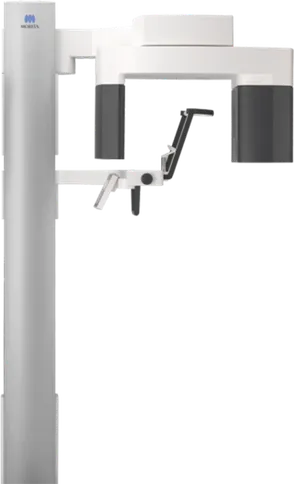
$2.56M
2026 federal Section 179 ceiling
Subject to purchase and business-income limits.
IRS Revenue Procedure 2025-32New or pre-owned
Eligible purchases can qualify.Financing can qualify
The down payment is not necessarily the deduction limit.Ready by December 31
For a 2026 deduction in a calendar-year practice.When you’re budgeting for a CBCT, new sensors or another operatory, it helps to know how much of the purchase your practice can deduct this year. In 2026, qualifying equipment may be fully deductible, including eligible pre-owned equipment and financed purchases.
The useful number is the after-tax cost. Getting there means understanding what qualifies, how much of the deduction your practice can use and when the equipment will be ready for use.
What a dental equipment write-off actually saves
Section 179 allows a business to elect to deduct eligible equipment costs in the year the equipment enters service, rather than recover those costs over several years. A deduction reduces taxable income. Your savings depend on the tax that would otherwise apply to that income.
For illustration, suppose a practice purchases $100,000 of qualifying equipment, uses it entirely for business and can use the full deduction that year. At an assumed 30% marginal tax rate, the deduction would reduce tax by $30,000. The remaining after-tax cost would be $70,000, before financing costs and other tax effects.
An illustrative $100,000 purchase
This is a hypothetical example. Your tax professional should calculate the actual benefit, including state treatment and interactions with other deductions. Taking the deduction upfront also leaves less equipment cost to deduct in later years.
Which dental equipment can qualify
The tax rules cover categories of property, rather than particular dental brands. Common candidates include:
| Category | Examples |
|---|---|
| Dental imaging | CBCT, panoramic and cephalometric systems; intraoral sensors; X-ray generators |
| Digital dentistry | Intraoral scanners, CAD/CAM mills and dental 3D printers |
| Operatory and sterilization equipment | Dental chairs, delivery systems, operatory lights and sterilizers |
| Practice technology and furnishings | Computers, servers and office furniture |
| Purchased software | Eligible off-the-shelf software; the license and purchase structure matter |
These examples are applications of the equipment categories in Section 179, rather than an IRS list of approved dental products. The purchase must still satisfy the applicable ownership, business-use and other requirements.
Pre-owned equipment can qualify, so buying new is not a requirement for the deduction. For a pre-owned CBCT, the equipment’s condition, software compatibility and support still deserve careful review. Related-party purchases have restrictions; moving equipment between businesses you control should not be assumed to create a new deduction.
Keep purchased software separate from subscriptions, maintenance and services on a bundled quote. They may receive different tax treatment.
The 2026 Section 179 limits
For tax years beginning in 2026, the maximum federal Section 179 deduction is $2,560,000. That ceiling falls dollar for dollar when the cost of qualifying Section 179 property placed in service exceeds $4,090,000. At $6,650,000, the deduction is fully phased out.
Those are aggregate limits, not a separate allowance for every machine or location. Section 179 also has a business-income limitation: a practice cannot assume the entire purchase is deductible this year simply because it is below the dollar ceiling. Amounts disallowed by the income limit generally carry forward, and pass-through businesses can face limits at both the entity and owner levels.
The major expansion came from legislation enacted in July 2025. The higher 2026 Section 179 figures reflect the annual inflation adjustment in IRS Revenue Procedure 2025-32, section 4.24.
Why 100% bonus depreciation belongs in the conversation
Bonus depreciation is a separate federal provision that can also allow a full first-year deduction for qualifying equipment. The 2025 law restored 100% bonus depreciation for eligible property acquired and placed in service after January 19, 2025. Certain used property qualifies too. The IRS explains the restored rule in Notice 2026-11.
The two provisions have different limits:
| Planning question | Section 179 | Bonus depreciation |
|---|---|---|
| Annual dollar ceiling | $2,560,000 for 2026, subject to phaseout | No comparable annual dollar ceiling |
| Business income | Current deduction limited by qualifying business income | No equivalent Section 179 income cap; other loss limitations may affect use |
| Choosing the deduction | Elect qualifying assets and amounts | Generally applies unless an election out is made for the property class |
These differences can matter when the practice has a large equipment budget or limited current income. See Section 179 and Section 168(k).
Your tax professional may use either provision or a combination. Section 179 is applied first; bonus depreciation applies to eligible remaining basis. The same dollars cannot be deducted twice.
The restored 100% bonus depreciation rule has no scheduled expiration under current law. December 31 matters because it closes the tax year for calendar-year practices. It is not the date the entire incentive disappears.
An older binding purchase contract needs a check of the acquisition-date rules before you assume the restored 100% rate applies.
Can you deduct equipment you’re still paying for?
An eligible financed purchase can qualify even when payments continue into later years. The tax basis of purchased property can include debt, so the deduction is not necessarily limited to the down payment or principal paid during 2026.
Keep the tax deduction and the payment schedule separate in your planning. A first-year deduction doesn’t eliminate future payments, and principal on an already deducted purchase does not become a second equipment deduction as you repay it.
An agreement described as a lease needs its own review. Tax ownership and the contract terms determine who can depreciate the equipment; the marketing label alone does not settle it. The IRS explains the distinction in its equipment lease and purchase guidance.
Ask for an itemized quote. Sales tax, freight, installation and testing generally become part of the equipment’s tax basis, as explained in IRS Publication 551. Separately priced services may receive different treatment.
The year-end deadline is about readiness
To claim a 2026 equipment deduction, a calendar-year practice generally needs the equipment placed in service by December 31, 2026. The IRS defines this as ready and available for its intended use in Publication 946.
A deposit or signed order does not establish that date. Equipment delivered in December but installed and operational in January generally enters service in January. Conversely, an operational system may be in service before its first patient appointment.
For a CBCT installation, work backward from a realistic operational date. Confirm delivery and installation availability, room preparation, electrical and IT requirements, and any applicable approvals. Schedule team training as part of the implementation plan as well.
Ask the supplier what your office needs to complete before installation, and retain the records showing when the equipment became ready for use.
What about renovations and state taxes?
Some office improvements can qualify for Section 179, including qualifying interior improvements and certain later roof, HVAC, fire protection, alarm and security improvements to nonresidential buildings. A building purchase, an expansion and a qualifying interior improvement are different tax categories. Have the project costs classified before assuming the whole renovation qualifies. IRS Topic 704 identifies the qualifying improvement categories.
Federal treatment also does not guarantee the same state deduction. Indiana, for example, generally limits its Section 179 allowance to $25,000 and requires adjustments for federal bonus depreciation, with specified exceptions described in Indiana DOR Bulletin 118. A savings estimate that simply adds federal and state tax rates can overstate the first-year benefit.
Get a quote your CPA can work with
Before approving the purchase, give your CPA the itemized equipment quote, financing or lease terms, expected business-use percentage and expected placed-in-service date. Ask how much of the deduction you can use in 2026 and what it does to your projected federal and state tax.
Business use and later disposition matter too. Section 179 generally requires more than 50% business use; a later reduction to 50% or less during the recovery period can trigger recapture. A later sale can have separate depreciation-recapture consequences. See the Form 4562 instructions and IRS Publication 544.
With the tax estimate in hand, you can compare the after-tax cost with the value of the upgrade to your practice. Include software compatibility, training, support and the payments you’ll carry after the deduction has been taken.
For a planned imaging purchase, request an itemized equipment quote from Dental TI. We can discuss the equipment and installation requirements so you and your CPA can evaluate a specific purchase.
Request an itemized equipment quote
General educational information about U.S. federal tax rules, with an Indiana example. Your tax professional should determine eligibility, elections and savings for your practice.