
Best Dental Laser for Soft Tissue
· David Hanning
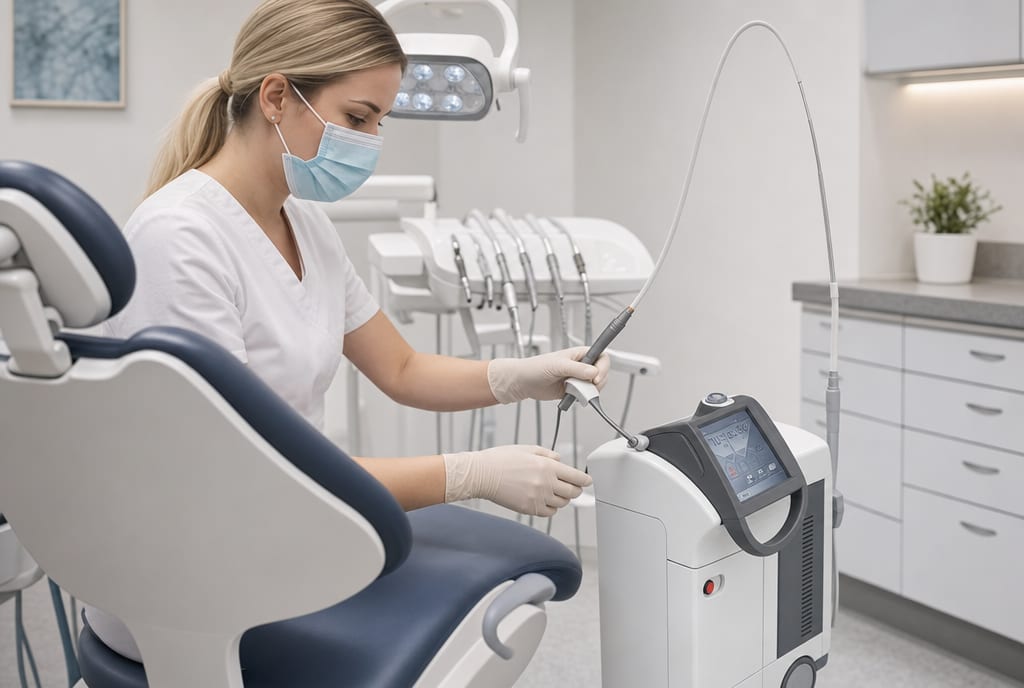
If you are trying to identify the best dental laser for soft tissue, the real question is not which unit has the most features on paper. It is which system fits your procedures, your team, and your production goals without creating training gaps or slowing the schedule. For most practices, the right answer comes down to wavelength, ease of use, clinical range, and the quality of implementation support behind the device.
Soft tissue lasers can be a smart addition to general practices, periodontic offices, and specialty settings because they help improve precision, reduce bleeding, and support a more comfortable patient experience in many routine procedures. But the wrong purchase can leave you with underused technology, inconsistent clinical adoption, and a longer return on investment than expected. That is why this buying decision deserves the same level of evaluation you would give any major clinical technology.
What makes the best dental laser for soft tissue?
There is no single best dental laser for soft tissue for every office. A solo GP adding frenectomies, troughing, and aphthous ulcer treatment has different needs than a high-volume perio practice or a multi-doctor office focused on hygiene-driven soft tissue protocols.
The strongest systems usually share a few traits. They are clinically versatile, easy for doctors and staff to learn, efficient in day-to-day use, and backed by reliable service and training. A laser may look attractive because of price or brand recognition, but if the interface is clunky or the team is not confident using it, clinical value drops quickly.
Wavelength is one of the first filters. Diode lasers are often the starting point for soft tissue applications because they are compact, practical, and generally cost-effective. They are commonly used for gingivectomy, sulcular debridement, exposure of unerupted teeth, impression troughing, and photobiomodulation-related applications depending on the system and protocol. CO2 and erbium platforms can also play a role, but they tend to sit in a different budget and clinical category.
Diode vs other laser types for soft tissue
For many practices, diode lasers are the leading candidate when evaluating soft tissue treatment technology. They typically offer a favorable balance of acquisition cost, small footprint, and strong utility across everyday procedures. If your goal is to add soft tissue capability without overcomplicating implementation, diode systems usually deserve the closest look.
That said, diode is not automatically the right answer in every case. If your clinical philosophy or service mix includes broader hard tissue applications, an erbium laser may be worth evaluating even though it usually carries a much higher investment. If your focus is primarily on precise soft tissue cutting with specific tissue interaction characteristics, some practices also consider CO2 platforms. The trade-off is that these systems can require a larger capital commitment and a more deliberate adoption plan.
For most general dental offices, the practical comparison is less about abstract technology categories and more about whether the laser will be used consistently. A diode unit that becomes part of daily restorative, hygiene, and minor surgical workflows often delivers more value than a more expensive platform with wider theoretical capability but limited real-world use.
How to evaluate a soft tissue laser for your practice
Start with procedures, not specs. Make a list of the cases you expect to perform regularly over the next 12 to 24 months. If your main needs are troughing, gingival recontouring, operculectomy, frenectomy, and lesion management, you may not need the most advanced platform on the market. You need a system that handles those indications predictably and efficiently.
Next, look at user experience. A touchscreen with intuitive presets, clear fiber management, and fast setup can matter more than a long feature list. If the doctor or assistant has to stop and troubleshoot settings in the operatory, the technology starts working against productivity.
Training is another major variable. Even excellent equipment can underperform if onboarding is thin. Clinical teams need more than a handoff and a manual. They need guidance on procedure selection, settings, safety protocols, patient communication, and integration into existing workflows. Offices that prioritize training usually adopt lasers faster and see stronger production impact.
Support should also be part of the purchasing decision, not an afterthought. Downtime, service delays, and unanswered clinical questions reduce confidence and usage. Practices evaluating high-value technology should ask who handles installation, what post-sale support looks like, and whether the vendor can help the office move from purchase to consistent utilization.
Features that matter most in the best dental laser for soft tissue
Power range matters, but only in context. You want enough flexibility to support the procedures you actually perform without paying for output levels that do not add practical value. Preset protocols can be helpful, especially for teams newer to laser dentistry, but they should still allow clinicians to make informed adjustments when needed.
Fiber delivery and ergonomics are often overlooked until the laser is in daily use. A comfortable handpiece, straightforward tip initiation process, and efficient setup can make a noticeable difference in adoption. If a device is cumbersome, team resistance tends to show up quickly.
Portability may be important if the unit will move between operatories. A compact system with a small footprint can fit more easily into fast-paced practices, especially where space is tight. For larger offices, mobility can improve utilization by removing the barrier of a fixed room assignment.
Software and interface design also matter. The best systems reduce friction. They make it easy to select procedures, confirm settings, and move into treatment confidently. Simplicity does not mean lack of capability. In fact, the most effective clinical technology often feels straightforward because it was designed for actual workflow, not just product demos.
ROI and the real cost of ownership
A soft tissue laser should be evaluated as a business tool as well as a clinical device. Purchase price matters, but it is only one piece of total cost. Consumables, maintenance, training time, warranty coverage, and service responsiveness all affect ownership value.
On the revenue side, the best return often comes from a combination of procedural expansion, increased efficiency, and improved patient acceptance. A practice may be able to perform soft tissue procedures more comfortably in-house, reduce referrals on selected cases, improve restorative workflow with better tissue management, and create a more modern treatment experience that supports case acceptance.
Still, ROI depends on use. A lower-cost laser that sits unused is more expensive than a premium system that becomes part of daily care. That is why implementation planning matters so much. Before purchase, it helps to identify likely users, target procedures, training schedule, and how success will be measured in the first six months.
Common buying mistakes to avoid
One of the most common mistakes is buying based on price alone. A budget-friendly unit can make sense, but not if support is weak or the interface frustrates the team. Another mistake is overbuying - selecting a platform with capabilities the practice is unlikely to use, then struggling to justify the investment.
Some offices also underestimate the importance of team buy-in. If assistants and hygienists are not included in training and workflow planning, adoption can stall. Laser dentistry often succeeds when the whole clinical team understands not just how to use the device, but when to recommend it and how to prepare patients for treatment.
Another issue is evaluating technology in isolation. The laser should fit the broader clinical and operational ecosystem of the office. That includes room setup, scheduling patterns, procedure mix, and the level of vendor partnership available after installation. A consultative approach usually produces a better result than a simple product comparison.
So, which laser is best?
The best dental laser for soft tissue is usually the one that matches your clinical goals, fits your workflow, and comes with enough support to ensure long-term use. For many general practices, that points to a well-supported diode platform with intuitive controls, solid training, and dependable service. For specialty offices or practices with broader procedural goals, it may justify looking at more advanced laser categories despite the higher cost.
The key is to evaluate the decision the way experienced technology buyers evaluate any major equipment purchase. Look beyond brochure claims. Focus on procedure fit, adoption risk, service structure, and measurable value over time. That is where a trusted technology partner can make a significant difference, especially when implementation support is as important as the device itself.
A good laser can improve soft tissue care. The right laser, paired with the right guidance, can improve how your practice works every day.