
The Dirty Secret Your Dental Marketing Agency Doesn't Want You to Know
· Dental TI
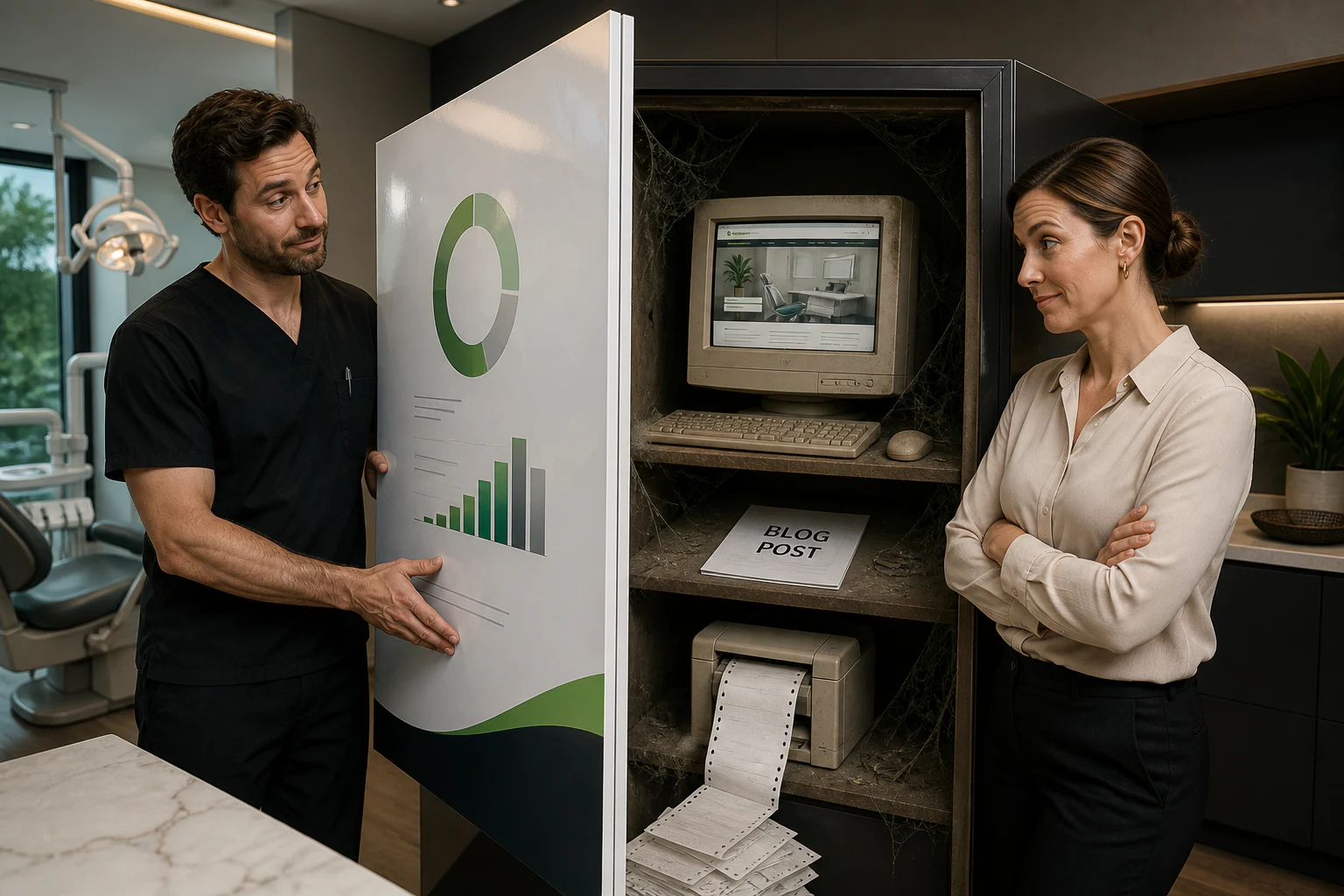
Your marketing agency may be charging you every month to do work your office could now manage in a normal conversation.
That is the dirty secret.
For many dental practices, the website is still operating like it was built in 2004. The doctor’s philosophy is buried under generic copy. Services have changed, but the site has not. A simple update becomes a support ticket. A blog post takes weeks. The monthly report arrives, but nobody in the practice can tell what actually changed.
The new model is different. Dental TI builds a custom website around the practice you actually run, then gives your team a conversational way to maintain it. Tell the system what changed. Review the real page in a private preview. Approve it. Publish it.
The hard work still matters: taste, design, positioning, technical structure, measurement, and careful iteration. We do that work up front. Once the foundation is right, your office should not need a permanent agency retainer just to keep the site current.
Many practices can own the system, run more of their marketing internally, and hire outside expertise only when it is genuinely needed.
You may be spending $14,400 to $60,000+ a year without owning the system
We reviewed publicly advertised dental marketing plans in August 2026. Many single-location programs landed between $1,200 and $3,500 per month. Multi-location plans reached $5,000 or more, frequently before the money paid directly to Google or Meta.
| Advertised monthly fee | Annualized cost before media spend |
|---|---|
| $1,200 | $14,400 |
| $2,000 | $24,000 |
| $3,500 | $42,000 |
| $5,000+ | $60,000+ |
Over three years, the retainer alone can total $43,200 to more than $180,000.
Those are not small operating expenses. The question is not whether every agency charging them is bad. The question is what permanent capability the practice bought.
After twelve months, can your team update the website without asking permission? Do you control the domain, source code, hosting, analytics, advertising accounts, call tracking, and content? Can a new partner continue from the work already completed, or would leaving force another rebuild?
If the practice cannot see the work, keep the assets, or operate the system, it is not building marketing equity. It is renting access.
The old model broke when the work became conversational
Most recurring marketing work is not mysterious. It follows a loop:
- Look at search demand and performance.
- Choose the business opportunity.
- Draft the page, article, ad, or update.
- Check the facts, links, tracking, privacy, and brand voice.
- Show the real change in a preview.
- Get approval and publish.
- Measure what happened and improve it.
AI can do a large share of the research, drafting, comparison, checking, and reporting in that loop. It can do it whenever the practice asks, without waiting for the next agency meeting.
Once the system is set up, a request can sound like this:
We now reserve two same-day emergency appointments. Add that to the emergency page, keep the tone calm and practical, update the calls to action, and show me a preview before anything goes live.
Or this:
Review our implant page against the questions people are actually searching, propose three useful additions, and explain which calls and forms we should count as qualified leads.
The office does not need to learn code to make those requests. It needs an owned site, controlled access, clear rules, and a responsible person who approves the result.
| The system can prepare | The practice still decides |
|---|---|
| Keyword and competitor research | Which services matter to the business |
| Service-page and blog drafts | Clinical accuracy and final claims |
| Ad variations and search-term reviews | Budget, targeting, and acceptable lead cost |
| Analytics summaries and anomaly flags | What counts as a qualified patient opportunity |
| Website edits and preview links | Whether the change is right and ready to publish |
AI does the repetitive grind. People keep the judgment.
Custom vision no longer requires custom friction
The biggest opportunity is not producing more generic pages. It is finally making the website feel like the practice.
The doctor can describe how the office should feel, why patients choose it, which procedures deserve attention, what competitors all get wrong, and which websites have the right visual energy. Dental TI translates that conversation into design, copy, structure, and a working preview. Then we iterate until the site is right.
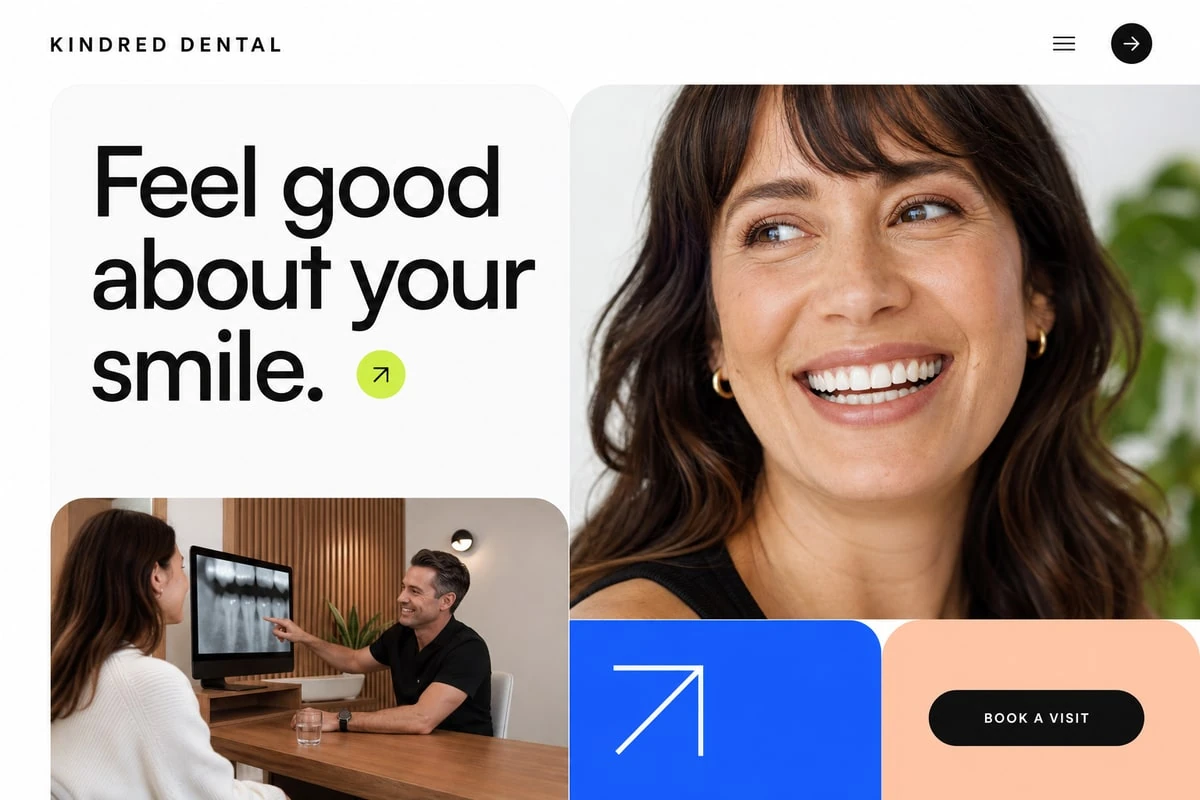
There is real taste and iteration in the front end. AI does not replace that. It removes much of the friction between the idea, the revision, and the finished page.
The result is not a template with a different logo. It is a site built around the practice, with a system the team can continue using after launch.
Ownership changes what happens after launch
A repository-backed website stores the site’s code and content with a history of every change. Pair it with practice-controlled hosting, analytics, advertising accounts, and conversion tracking, and the practice has an operating system instead of a rented brochure.
- Every proposed change can produce a real preview before publication.
- Automated checks can catch broken links, missing headings, or prohibited language.
- A bad change can be rolled back.
- New pages can reuse the practice’s approved voice, facts, and design system.
- A trained staff member can request routine updates conversationally.
- A developer, specialist, or agency can still contribute without taking ownership away from the practice.
That last point matters. Dental TI is not locking the office into a new black box. We are building the foundation that makes every future employee, tool, and specialist more useful.
Your agency is not embedded in your practice every day
An account manager serving a roster of clients is not living inside your business. They do not hear every front-desk question, notice every new scheduling opportunity, or automatically know that a service has become a priority.
That is why so many agency relationships settle into a slow rhythm: monthly report, occasional post, periodic meeting, and a queue for changes.
An owned AI-assisted workflow can look at current aggregate data whenever you ask. It can surface a traffic drop, a broken conversion, an expensive search term, a content gap, or a page that no longer matches the way the practice operates. The responsible person can review the evidence and decide what changes.
Paid advertising already depends heavily on automation. Google’s Smart Bidding guidance describes auction-time bidding based on conversion likelihood. The real advantage is not paying someone to move bids by hand. It is defining the right conversions, keeping the tracking accurate, reviewing lead quality, and correcting the system when it optimizes toward the wrong outcome.
Campaigns do not need pointless daily tinkering. They do need an accountable system that can be inspected the moment something changes.
Useful AI content is not the problem
Google Search Central says generative AI can support research and add structure to original content. Google’s concern is scaled content that adds little value.
That distinction is important. Fifty thin pages with city names swapped out are still fifty thin pages. A strong dental page includes details a generic writer cannot invent:
- The services the practice actually provides
- The doctor’s treatment philosophy
- The questions patients ask in that office
- The real scheduling, financing, and follow-up process
- Accurate clinical statements the practice is prepared to stand behind
- A useful next step for the reader
AI makes it faster to organize and express that knowledge. Dental TI builds the process that gets the real knowledge into the work.
There is no need to wait months for the next website refresh. When the practice changes, the site can change with it.
We rebuilt Dental TI this way
Dental TI’s old website carried the kind of accumulated technical debt we see across the industry. A historical SEMrush audit crawled 170 URLs and reported 82% Site Health, 11 errors, and 546 warnings.

We rebuilt the site as an owned, custom system. In fresh paid checks through Monid on August 24, 2026, the homepage, Dental TI AI page, blog index, and CBCT index returned no on-page issues.
The bigger improvement is what happens next. When we find something to change, we do not submit a ticket and wait for a vendor. The finding becomes an edit, the edit becomes a private preview, automated checks verify the release, and the full change remains documented and reversible.
That is the system we build for dental practices.
Can you fire your marketing agency?
Many practices can.
If most of your retainer pays for occasional website edits, a blog post, basic keyword research, routine ad review, and a monthly dashboard, an owned website and a well-built AI workflow can absorb much of that work.
Outside expertise does not disappear. Keep a specialist when you need original photography, a major campaign, complex multi-location strategy, or experienced oversight of significant ad spend. Pay for judgment and capacity when they create value.
What you should not have to keep paying for is access to your own website, your own data, or routine work your team can now direct in plain language.
Once Dental TI has built the foundation and trained the responsible people in your office, you choose what happens next. Manage the recurring work internally. Bring in a specialist for a defined project. Keep an agency only if it is producing enough value to earn the retainer.
The agency should be optional. Your marketing system should not be.
Dental TI does the hard part first
The system works because Dental TI handles the setup that a busy office should not have to invent.
Discover. We learn the practice philosophy, services, patients, workflow, priorities, and visual taste.
Design and build. We create the custom direction, iterate on the front end, and build the owned website around real business goals.
Connect. We connect the repository, hosting, analytics, conversion tracking, and practice-approved AI tools. The tool may be ChatGPT, Claude, or something else as products change. The operating model belongs to the practice.
Codify. We turn the practice’s voice, facts, evidence standards, privacy boundaries, and approval steps into reusable rules.
Train. We show the office how to ask for a change, review the real preview, approve publication, and recognize when expert help is the right call.
Dental TI AI also offers a separate phone-agent layer for calls, appointment tasks, insurance workflows where supported, and defined front-desk handoffs. Phone and practice-management workflows require their own integrations and controls, so we configure that layer separately from the public website and marketing system.
Patient information stays out of ordinary marketing workflows
Consumer AI accounts should not receive protected health information or other patient-identifiable data.
Marketing analysis can use aggregate totals such as calls, form conversions, cost per lead, and booked consultations. It does not need patient names, treatment details, radiographs, or transcripts containing health information.
HHS guidance on HIPAA and cloud computing explains when a cloud provider is a business associate and why appropriate agreements and security controls matter. If a workflow must handle protected information, it needs an organization-approved service, the required agreements, controlled permissions, and the practice’s privacy process.
Your next website starts with one conversation
Schedule a website working session with Dental TI. We will talk through your practice philosophy, the services you actually provide, the patients you want to reach, what is wrong with the current site, and what you want the new one to feel like.
By the end of that session, you will see a high-quality first preview built around your practice, not a recycled dental template.
If the direction is right, Dental TI finishes the custom site, connects the approved tools and accounts, builds the operating rules, and trains your team to request updates conversationally. Your office leaves with a website it owns and a system it can keep using.